A good night’s sleep doesn’t begin when your child climbs into bed—it starts much earlier, often at the dinner table. While bedtime routines, screen time, and a comfortable bedroom all play a role in sleep quality, nutrition is another important piece of the puzzle.
Healthy eating habits can help children fall asleep more easily, stay asleep longer, and wake up feeling refreshed. On the other hand, sugary snacks, heavy meals, or too much caffeine can interfere with restful sleep.
If you’re looking for practical ways to help your child sleep better, these simple eating habits are a great place to start.
Why Nutrition Matters for Sleep
The foods children eat throughout the day provide the nutrients their bodies need to grow, stay active, and support healthy sleep. A balanced diet helps regulate energy levels and contributes to the production of hormones involved in the sleep-wake cycle.
While no single food guarantees a perfect night’s sleep, consistent healthy eating habits can support better rest over time.
1. Serve Balanced Meals Throughout the Day
Children who eat regular, balanced meals are less likely to feel overly hungry before bedtime.
Aim to include:
- Fruits and vegetables
- Whole grains
- Lean proteins
- Healthy fats
- Dairy or fortified alternatives
Balanced meals help provide steady energy and may reduce late-night cravings.
2. Don’t Skip Breakfast
Breakfast helps set the body’s daily rhythm.
Children who start the day with a nutritious breakfast are more likely to maintain regular eating patterns, which can contribute to healthier sleep schedules later in the day.
Good breakfast choices include oatmeal, eggs, yogurt, fruit, or whole-grain toast.
3. Avoid Too Much Sugar Before Bed
Desserts, candy, sugary cereals, and sweet drinks close to bedtime may leave some children feeling more energetic when it’s time to wind down.
Instead, choose snacks with a combination of protein and complex carbohydrates to help keep children satisfied.
4. Offer a Light Evening Snack if Needed
Not every child needs a bedtime snack, but for some, a light snack can prevent hunger from interrupting sleep.
Some healthy ideas include:
- Banana with peanut butter (if appropriate for your child)
- Plain yogurt with berries
- Whole-grain crackers with cheese
- Oatmeal
- Apple slices with almond butter (if appropriate)
Keep portions moderate to avoid going to bed overly full.
5. Eat Dinner at a Consistent Time
A predictable dinner schedule helps establish a daily routine.
Whenever possible, try to serve dinner about two to three hours before bedtime. This gives children time to digest before lying down.
6. Encourage Foods Rich in Important Nutrients
Many nutritious foods naturally contain vitamins and minerals that support overall health.
Examples include:
- Leafy green vegetables
- Beans
- Dairy products
- Fish
- Nuts and seeds (age-appropriate and only if safe for the child)
- Whole grains
Offering a variety of foods helps children meet their nutritional needs.
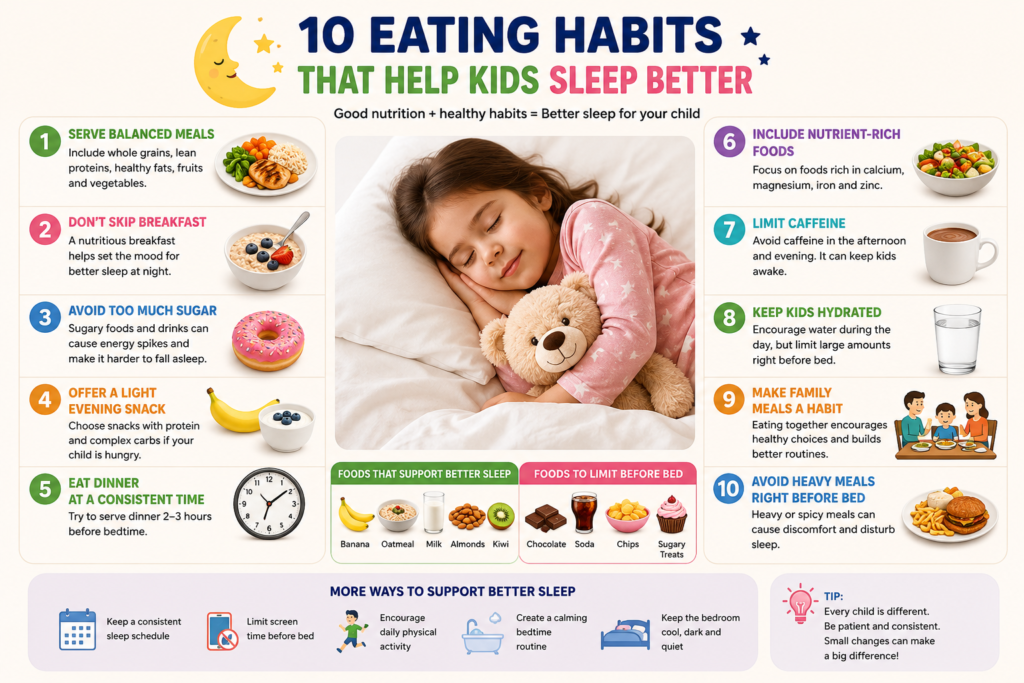
7. Limit Caffeinated Foods and Drinks
Many parents are surprised to learn that caffeine isn’t only found in coffee.
It may also be present in:
- Cola drinks
- Energy drinks
- Some teas
- Chocolate
- Certain specialty beverages
Limiting caffeine, especially in the afternoon and evening, can help support healthy sleep.
8. Keep Kids Hydrated During the Day
Proper hydration supports overall health.
Encourage children to drink water regularly throughout the day instead of consuming large amounts just before bedtime, which may lead to nighttime bathroom trips.
9. Make Family Meals a Habit
Children often develop healthier eating habits when families eat together.
Family meals create opportunities to introduce nutritious foods, encourage mindful eating, and establish routines that support both health and sleep.
Even sharing dinner together a few times each week can make a positive difference.
10. Avoid Heavy Meals Right Before Bed
Large, rich, or spicy meals close to bedtime may leave some children feeling uncomfortable.
If dinner is served late, keep portions reasonable and avoid foods that are especially heavy or greasy.
Foods That Can Be Included in a Healthy Evening Routine
While every child is different, these foods can fit into a balanced diet and make good bedtime snack options when appropriate:
- Bananas
- Oatmeal
- Plain yogurt
- Milk
- Whole-grain cereal (low in added sugar)
- Whole-grain toast
- Cottage cheese
- Kiwi
- Cherries (when in season)
- Apples
Focus on overall dietary patterns rather than any single “sleep food.”
Foods to Limit Before Bed
Some foods and drinks are best limited in the evening, including:
- Candy
- Sugary soft drinks
- Energy drinks
- Chips
- Fast food
- Highly processed snacks
- Large desserts
- Excess chocolate
- Very spicy meals
Moderation is key, and occasional treats can still fit into a balanced lifestyle.
Healthy Eating Is Only One Part of Better Sleep
Nutrition works best when combined with healthy sleep habits.
Try to:
- Keep a consistent bedtime.
- Limit screen time before bed.
- Encourage physical activity during the day.
- Create a calm bedtime routine.
- Keep the bedroom cool, dark, and quiet.
Together, these habits can support better sleep over time.
Frequently Asked Questions
Can certain foods make kids fall asleep instantly?
No. There isn’t a single food that guarantees immediate sleep. A balanced diet and consistent bedtime routine are more important than any individual food.
Is milk before bed good for children?
Milk can be part of a healthy bedtime snack for many children, provided it fits their dietary needs and they are not allergic or intolerant.
Should kids go to bed hungry?
Generally, no. If your child is hungry before bed, a light, nutritious snack may help them feel comfortable enough to sleep.
Is chocolate okay before bedtime?
Chocolate contains sugar and may contain caffeine. It’s usually better to enjoy it earlier in the day rather than close to bedtime.
Healthy eating habits are one of the many building blocks of good sleep. By offering balanced meals, limiting sugary snacks before bedtime, and maintaining consistent meal times, parents can help create an environment that supports restful nights.
Remember that every child is unique. If your child regularly has difficulty sleeping despite healthy routines, consider discussing your concerns with a qualified healthcare professional.
To make bedtime planning even easier, use the free calculators on NapTimeCalculator.com to find age-appropriate nap schedules and bedtime recommendations that fit your child’s routine.