Travelling across time zones can wreak havoc on your body, but with the right jet lag calculator and recovery plan, you can arrive feeling refreshed and ready to explore. Jet lag is more than just feeling tired after a long flight—it’s a temporary sleep disorder that occurs when your body’s internal clock, or circadian rhythm, falls out of sync with the local time at your destination. The more time zones you cross, the longer it typically takes your body to adjust, with a general rule of thumb being about one day per time zone crossed. However, you don’t have to suffer through days of grogginess because with the help of a jet lag calculator and some strategic planning, you can significantly reduce your recovery time and make the most of your trip from day one.
A jet lag calculator is a digital tool designed to help you plan your sleep, light exposure, and activities around your flight schedule. By entering details like your departure and arrival cities, flight times, and your usual sleep patterns, the calculator creates a personalised schedule to help your body adjust to the new time zone. The goal is to minimise the effects of jet lag by gradually shifting your sleep-wake cycle, either before your flight, after arrival, or both, using natural cues like light exposure and the timing of meals. There are several compelling reasons to use a jet lag recovery calculator. It helps you start your trip refreshed instead of losing valuable holiday or business days to fatigue, and the best calculators use established sleep science and circadian rhythm research to give you a plan that works. A good calculator considers the direction of travel, noting that eastward travel is harder than westward, and offers advice on light exposure, meal timing, and even melatonin supplementation. This tool is crucial for business travellers or those on short trips where you cannot afford to waste days adjusting, and it helps reduce unwanted symptoms like daytime sleepiness, brain fog, digestive problems, and insomnia.
The science behind a jet lag calculator involves helping you manipulate key biological mechanisms. Your suprachiasmatic nucleus, which is the master clock in your brain, responds most strongly to light, with light received in the morning advancing your clock while light in the evening delays it, so a calculator tells you precisely when to seek or avoid bright light to shift your clock in the right direction. Melatonin, a hormone your body produces in darkness that signals it is time for sleep, can be taken in a small dose at the right time to help trick your brain into adopting the new time zone’s schedule. Additionally, your organs have their own clocks that are heavily influenced by when you eat, so eating meals at destination-specific times helps reset these peripheral clocks faster and aids your overall recovery.
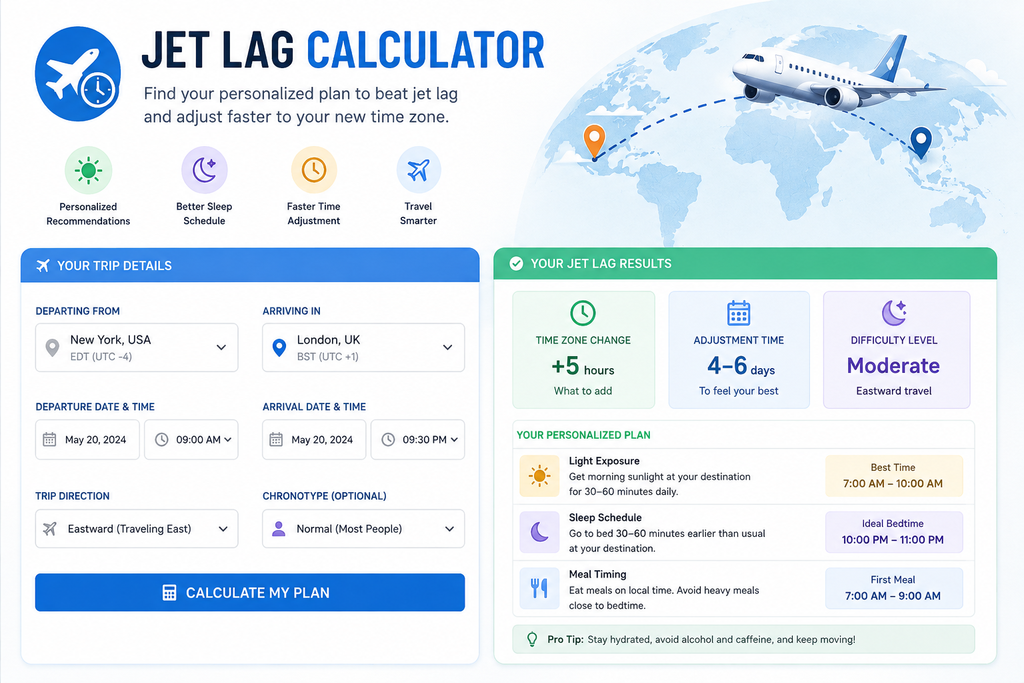
Jet Lag Calculator how it works : Upon clicking the calculate button, the tool generates a detailed recovery plan that includes a flight summary, a pre-departure strategy with specific advice on shifting sleep schedules and managing light exposure based on the direction of travel, in-flight guidance on when to sleep or stay awake, and post-arrival recovery recommendations tailored to the arrival time. The plan also provides tips on managing light exposure, considering melatonin, timing meals properly, and staying hydrated, with the disclaimer that this is a basic plan for demonstration purposes and that a truly personalised experience is available on the full calculator.
Beyond using the calculator, combining it with additional strategies will yield the best results. You should gradually adjust your sleep schedule by shifting your bedtime and wake time by fifteen to thirty minutes per day towards your destination’s schedule, starting three to five days before your flight. Mastering light exposure is essential, so if you are travelling eastward, seek morning light and avoid evening light, while if you are travelling westward, seek evening light and avoid early morning light. Considering a low dose of melatonin at your destination’s bedtime can be very effective, and timing your meals according to the local time at your destination, even if you are not hungry, helps reset your body’s clocks. Finally, staying hydrated by drinking plenty of water before, during, and after your flight while avoiding excessive alcohol and caffeine will support your overall recovery. By using the embedded jet lag calculator and following these strategies, you can minimise the impact of jet lag and ensure you make the most of your travels, arriving at your destination feeling refreshed and ready to enjoy every moment of your journey.
🌍 Jet Lag Recovery Calculator
Plan your sleep and light exposure to beat jet lag.