Learn the difference between sleep deprivation and sleep debt, how they affect your health, and practical ways to recover better sleep. Discover expert tips to improve your sleep schedule.
Introduction
Have you ever slept only five hours for a few nights and promised yourself you’d “catch up on the weekend”? You’re not alone. Many people confuse sleep deprivation with sleep debt, but they’re not exactly the same thing. Understanding the difference can help you make better decisions about your sleep and overall health.
What Is Sleep Deprivation?
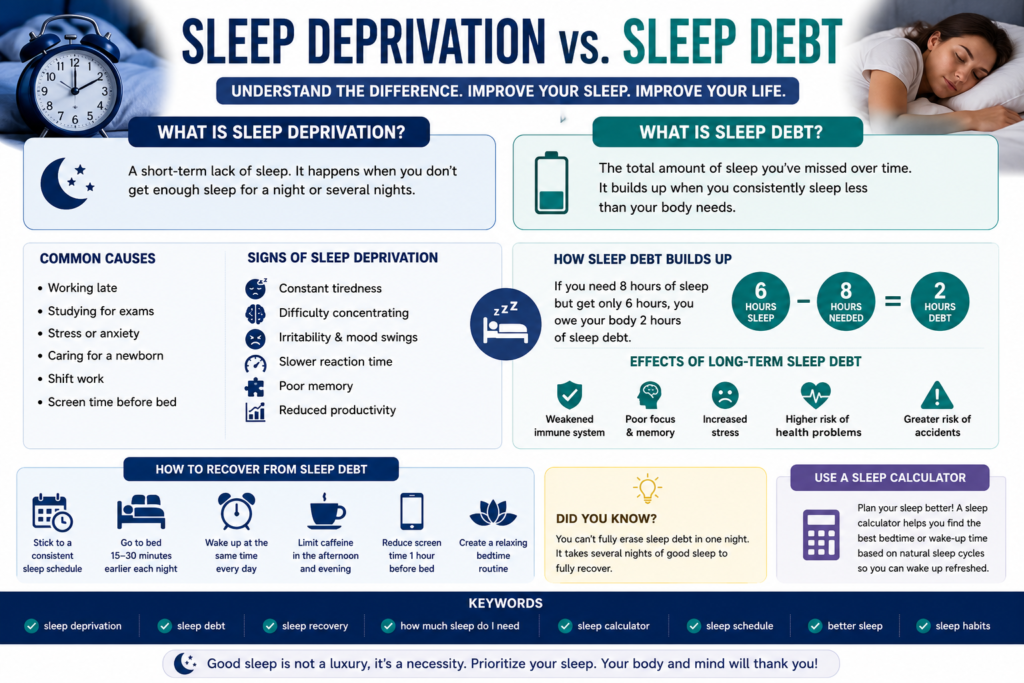
Sleep deprivation happens when you don’t get enough sleep over a short period. It could be one late night, several nights of poor sleep, or staying awake for an extended period.
Common causes include:
- Working late
- Studying for exams
- Caring for a newborn
- Stress or anxiety
- Shift work
- Excessive screen time before bed
Signs of Sleep Deprivation
- Constant tiredness
- Difficulty concentrating
- Irritability
- Slower reaction time
- Frequent yawning
- Reduced productivity
- Poor memory
Even one night of inadequate sleep can affect your mood, decision-making, and performance the next day.
What Is Sleep Debt?
Sleep debt is the amount of sleep you’ve missed over time. Think of it like a bank account.
If your body needs 8 hours of sleep each night but you only get 6 hours, you’ve accumulated 2 hours of sleep debt that day. Continue this pattern for five days, and your sleep debt grows to 10 hours.
Unlike financial debt, you can’t always erase sleep debt with one long night’s sleep. Recovery often takes several days of consistent, quality sleep.
Why Sleep Debt Matters
Ongoing sleep debt can affect almost every part of your health, including:
- Weakened immune system
- Reduced focus and memory
- Increased stress
- Lower energy levels
- Higher risk of accidents
- Poor athletic performance
- Increased risk of chronic health conditions over time
Can You Catch Up on Lost Sleep?
Yes—but only to a point.
Sleeping an extra hour or two on the weekend may help you feel better temporarily, but it doesn’t completely reverse weeks or months of poor sleep.
The best approach is to gradually return to a consistent sleep schedule by:
- Going to bed 15–30 minutes earlier each night
- Waking up at the same time every day
- Limiting caffeine late in the day
- Reducing screen time before bed
- Creating a relaxing bedtime routine
How a Sleep Calculator Can Help
One of the easiest ways to improve your sleep is to plan it.
A sleep calculator helps you determine the best bedtime or wake-up time based on natural sleep cycles. Instead of guessing when to sleep, you can build a schedule that leaves you feeling more refreshed and reduces the chance of accumulating sleep debt.
Final Thoughts
Sleep deprivation is a short-term lack of sleep, while sleep debt is the total amount of sleep you’ve lost over days or weeks. Both can affect your physical and mental well-being, but the good news is that healthy sleep habits can help you recover.
If you’ve been feeling tired for weeks, don’t ignore it. Prioritizing consistent sleep and using a sleep calculator to plan your schedule can make a noticeable difference in your energy, focus, and overall health.