As a parent, you’ve probably experienced this before: your baby is happily playing one minute, and the next they’re crying and refusing to sleep. It can feel like their mood changed in an instant. The truth is, babies usually give us small hints that they’re getting tired—we just don’t always recognize them.
These hints are called sleep cues, and learning to spot them can make naps and bedtime much easier. Instead of waiting until your baby is overtired and upset, you can help them settle down while they’re still calm and ready for sleep.
What Are Baby Sleep Cues?
Sleep cues are the little signs your baby shows when they’re becoming tired. Some cues are very obvious, like yawning, while others are much more subtle, such as looking away from people or losing interest in a favorite toy.
Every baby is different. Some babies become quiet when they’re sleepy, while others get more active or clingy. The key is paying attention to your baby’s unique patterns.
Early Sleep Cues: The Best Time to Start a Nap
The earlier you notice your baby’s sleep cues, the easier it usually is for them to fall asleep.
Some common early signs include:
- Yawning
- Looking away from faces or toys
- Becoming quieter than usual
- Slower movements
- Staring into space
- Losing interest in play
When you notice these signs, it’s a good idea to begin your nap routine. A diaper change, a cuddle, dimming the lights, or reading a short story can help your baby transition smoothly into sleep.
Mid Sleep Cues
If your baby doesn’t fall asleep during the early stage, you’ll likely notice stronger signs of tiredness.
These may include:
- Rubbing their eyes
- Pulling at their ears
- Rubbing their face
- Becoming fussy
- Wanting to be held
- Crying more easily
At this point, it’s best to put your baby down for a nap as soon as possible. Waiting much longer can make it harder for them to settle.
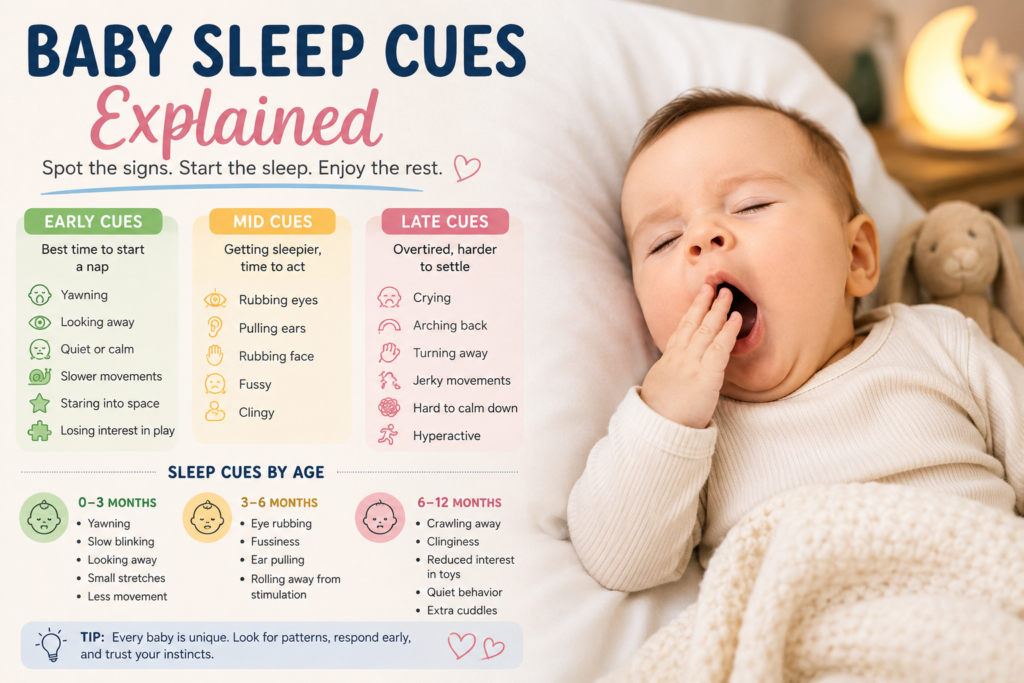
Late Sleep Cues: When Your Baby Is Overtired
An overtired baby often has a much harder time falling asleep. Their body releases stress hormones, making them seem more awake even though they’re exhausted.
Late sleep cues may include:
- Intense crying
- Arching their back
- Turning away from everything
- Flailing their arms and legs
- Refusing to settle
- Acting hyper or unusually energetic
If you’ve ever wondered why your baby fights sleep when they clearly need it, overtiredness is often the reason.
Sleep Cues Change as Babies Grow
Your baby’s sleep cues won’t stay the same forever. As they get older, you’ll start noticing different patterns.
Newborns (0–3 Months)
Newborns usually become sleepy very quickly. Their most common sleep cues include yawning, slow blinking, stretching, and quietly looking away from stimulation.
Babies 3–6 Months
Around this age, babies often begin rubbing their eyes, pulling at their ears, or becoming fussier when they’re tired.
Babies 6–12 Months
Older babies may crawl away from play, become clingy, or simply stop showing interest in toys. Some even rest their head on your shoulder when they’re ready for sleep.
Should You Follow Sleep Cues or Wake Windows?
The best approach is to use both.
Wake windows give you a rough idea of how long your baby can comfortably stay awake based on their age. Sleep cues tell you when your baby is personally ready for sleep.
For example, if your six-month-old usually stays awake for around two and a half hours but starts yawning after two hours, it’s perfectly okay to begin the nap a little earlier.
Think of wake windows as a guide and sleep cues as your baby’s way of saying, “I’m ready now.”
Tips for Recognizing Sleep Cues
- Watch your baby’s behavior instead of only watching the clock.
- Keep a simple sleep diary for a few days to notice patterns.
- Start a calming bedtime routine as soon as you notice early cues.
- Try not to wait until your baby is crying before offering a nap.
- Remember that illness, growth spurts, and teething can temporarily change your baby’s sleep cues.
Frequently Asked Questions
Do all babies have the same sleep cues?
No. While many babies yawn or rub their eyes, others may simply become quiet or stop interacting. You’ll get to know your baby’s unique signals over time.
What happens if I miss my baby’s sleep cues?
Missing early cues doesn’t mean you’ve done anything wrong. It simply means your baby may become overtired, making it harder for them to fall asleep. The more you observe your baby’s patterns, the easier it becomes to catch those early signs.
Can a baby be tired without yawning?
Absolutely. Yawning is common, but not every baby does it before every nap. Looking away, becoming quiet, or losing interest in play can all be signs that your baby is ready for sleep.
Learning your baby’s sleep cues is one of the simplest ways to make naps and bedtime less stressful. Every baby is unique, so don’t worry if your little one doesn’t follow every sign listed above.
With a little practice, you’ll begin to recognize your baby’s natural rhythm. Combining those cues with age-appropriate wake windows can help your child fall asleep more easily and develop healthy sleep habits.
If you’re unsure about the best nap time for your baby’s age, try using the Nap Time Calculator on our website. It can help you plan naps around your baby’s wake windows while still paying attention to their individual sleep cues.