If you’re a new parent, you’ve probably already learned that newborns don’t exactly follow a sleep schedule. One minute they’re peacefully sleeping in your arms, and the next they’re wide awake and ready for a feeding. While sleepless nights are a normal part of caring for a newborn, there are a few simple things you can do to help your baby sleep more comfortably—and maybe even get a little more rest yourself.
1. Understand That Newborn Sleep Is Different
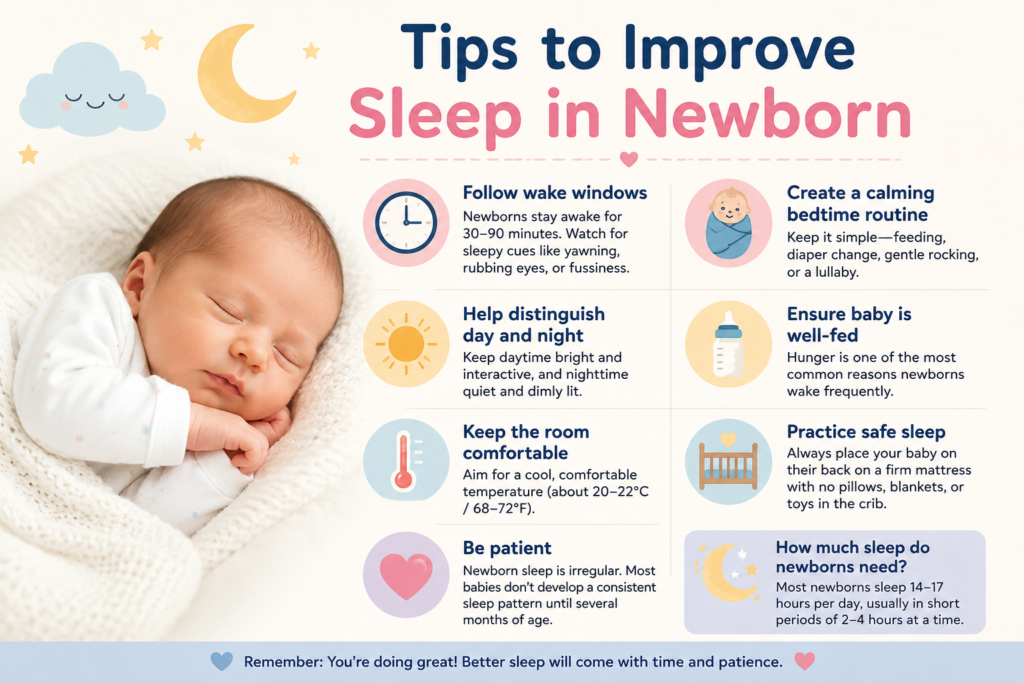
One of the biggest surprises for many parents is just how often newborns wake up. Most newborns sleep between 14 and 17 hours a day, but those hours are usually broken into short naps and feeding sessions. This is completely normal and an important part of their growth and development.
2. Watch for Sleepy Signs
Babies often tell us they’re tired before they start crying. Yawning, rubbing their eyes, looking away, or becoming fussy can all be signs that your baby is ready for sleep. Catching these cues early can make bedtime much easier.
3. Create a Calm Sleeping Environment
A quiet, cozy room can make a big difference. Try dimming the lights, reducing noise, and keeping the room at a comfortable temperature. Some babies also find white noise soothing because it reminds them of the sounds they heard before birth.
4. Keep a Simple Bedtime Routine
Your routine doesn’t need to be complicated. A diaper change, feeding, gentle rocking, and a soft lullaby can help signal that it’s time to sleep. The goal is consistency, not perfection.
5. Help Your Baby Learn the Difference Between Day and Night
During the day, let natural light into your home and interact with your baby during feedings. At night, keep lights low and conversations quiet. Over time, this helps babies understand when it’s time to be awake and when it’s time to sleep.
6. Make Sure Your Baby Is Well Fed
A hungry baby is unlikely to stay asleep for long. Regular feedings help keep your baby comfortable and can sometimes lead to longer stretches of sleep as they grow.
7. Avoid Overtiredness
Many parents assume that keeping a baby awake longer will help them sleep better. In reality, an overtired baby often has a harder time settling down. When you notice sleepy cues, try putting your baby down before they become overly fussy.
8. Follow Safe Sleep Guidelines
For every sleep, place your baby on their back on a firm mattress. Keep the crib free of blankets, pillows, stuffed animals, and other loose items. Safe sleep practices are one of the most important ways to protect your baby.
9. Accept That Every Baby Is Different
It’s easy to compare your baby’s sleep habits to what you read online or hear from friends. The truth is that every baby develops at their own pace. What works for one family may not work for another, and that’s perfectly okay.
10. Give Yourself Grace
Life with a newborn can be overwhelming. If your baby isn’t sleeping through the night yet, know that you’re not at fault. Sleep patterns shift rapidly in the first few months, and this phase is temporary. Seek support when you can, rest whenever possible, and remind yourself that you’re doing an incredible job.
The early weeks with a newborn can feel like a blur of feedings, diaper changes, and sleepless nights. While there’s no magic solution that guarantees perfect sleep, small, consistent habits can help your baby rest better over time. Most importantly, be patient with both your baby and yourself. Better sleep will come, and these precious newborn days pass faster than you might think.