Learn how to fix an irregular sleep schedule with practical, science-backed tips. Improve sleep quality, wake up refreshed, and build healthy sleep habits.
An irregular sleep schedule can leave you feeling tired, unfocused, and frustrated throughout the day. Whether you’re staying up late, sleeping in on weekends, working shifts, or simply struggling to maintain a routine, inconsistent sleep can disrupt your body’s natural clock.
The good news is that you can reset your sleep schedule with a few simple habits and consistent effort.
What Causes an Irregular Sleep Schedule?
Several factors can contribute to inconsistent sleeping patterns:
- Late-night screen use
- Shift work or changing work hours
- Jet lag
- Stress and anxiety
- Excessive caffeine consumption
- Sleeping in on weekends
- Poor bedtime routines
Understanding the cause is the first step toward creating healthier sleep habits.
Why Your Sleep Schedule Matters
Your body follows a natural 24-hour cycle known as the circadian rhythm. This internal clock helps regulate sleep, wakefulness, hormone production, and energy levels.
When your sleep schedule changes frequently, your circadian rhythm becomes disrupted, making it harder to fall asleep and wake up at consistent times.
Common effects include:
- Daytime fatigue
- Difficulty concentrating
- Mood changes
- Reduced productivity
- Increased stress
Step 1: Set a Consistent Wake-Up Time
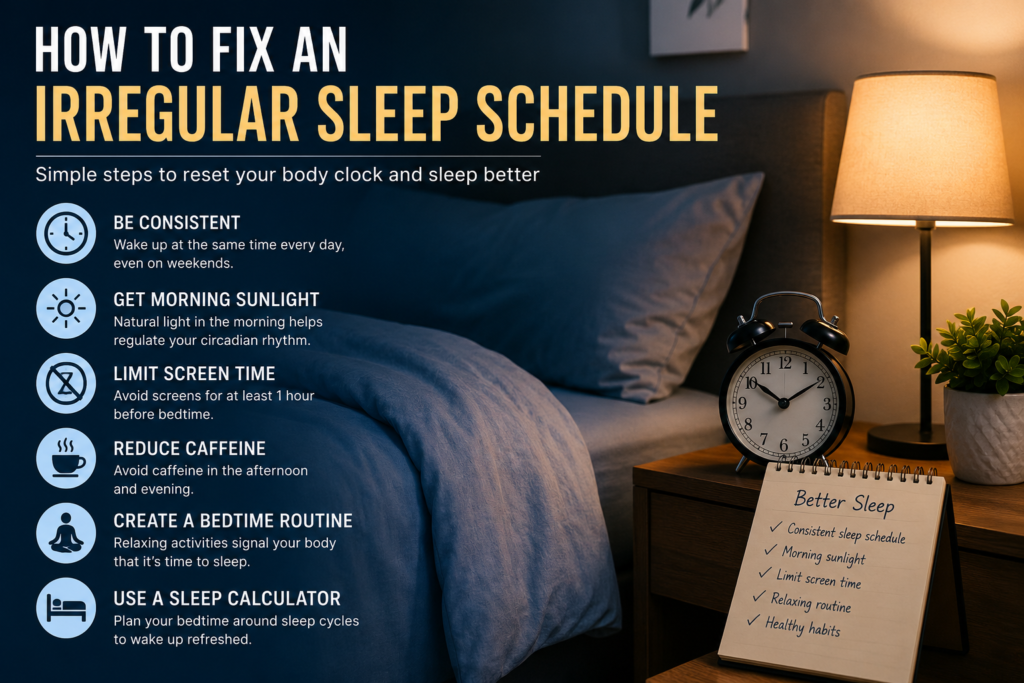
The most effective way to reset your sleep schedule is to wake up at the same time every day.
Even on weekends, try to keep your wake-up time within one hour of your normal schedule. Consistency helps train your body’s internal clock.
Step 2: Adjust Your Bedtime Gradually
Avoid trying to change your sleep schedule all at once.
Instead, move your bedtime by 15 to 30 minutes earlier each night until you reach your target bedtime. Small adjustments are easier for your body to adapt to.
Step 3: Get Morning Sunlight
Natural light is one of the strongest signals for regulating your circadian rhythm.
Spend 15–30 minutes outdoors shortly after waking up. Morning sunlight tells your brain it’s time to be alert and helps you feel sleepy at night.
Step 4: Limit Screen Time Before Bed
Phones, tablets, and computers emit blue light, which can suppress melatonin production.
Try to avoid screens for at least one hour before bedtime. If necessary, use blue-light filters or night mode settings.
Step 5: Reduce Evening Caffeine
Caffeine can stay in your system for several hours.
Avoid coffee, energy drinks, and other caffeinated beverages during the late afternoon and evening to improve your ability to fall asleep.
Step 6: Create a Relaxing Bedtime Routine
A calming routine signals your body that it’s time to sleep.
Consider activities such as:
- Reading a book
- Gentle stretching
- Meditation
- Deep breathing exercises
- Taking a warm shower
Repeating the same routine each night helps build a strong sleep habit.
Step 7: Avoid Long Daytime Naps
While naps can be helpful, long naps may make it harder to fall asleep at night.
If you need a nap, keep it between 10 and 30 minutes and avoid napping late in the day.
Step 8: Use a Sleep Calculator
Timing your sleep around natural sleep cycles can help you wake up feeling more refreshed.
A sleep calculator can help determine the ideal bedtime based on your desired wake-up time and typical sleep cycles.
How Long Does It Take to Reset a Sleep Schedule?
Most people notice improvements within a few days, but fully adjusting your sleep schedule can take one to three weeks depending on how large the change is.
Consistency is the key to long-term success.
Fixing an irregular sleep schedule doesn’t happen overnight, but small daily changes can make a significant difference. Focus on maintaining a consistent wake-up time, getting morning sunlight, reducing screen exposure before bed, and creating a relaxing nighttime routine.
With patience and consistency, your body can return to a healthier sleep pattern, helping you wake up energized and ready for the day.