Best Sleep Habits for Busy People: Sleep Smarter, Not Less Ever feel like there just aren’t enough hours in the day? You’re not alone. Many people cut back on sleep to finish work, study, or catch up on life. The problem is that losing sleep often makes you less productive the next day. When you’re well-rested, you think more clearly, stay focused longer, and have more energy to tackle your to-do list.
Disclosure: This article contains affiliate links. If you purchase through these links, I may earn a small commission at no extra cost to you. I only recommend products I believe may be useful to readers.
Stop Treating Sleep Like an Afterthought
Sleep isn’t wasted time—it’s an investment in your health. While you sleep, your body repairs muscles, strengthens your immune system, and helps your brain store memories. Even one extra hour of quality sleep can improve your mood, concentration, and decision-making.
Build a Bedtime You Actually Look Forward To
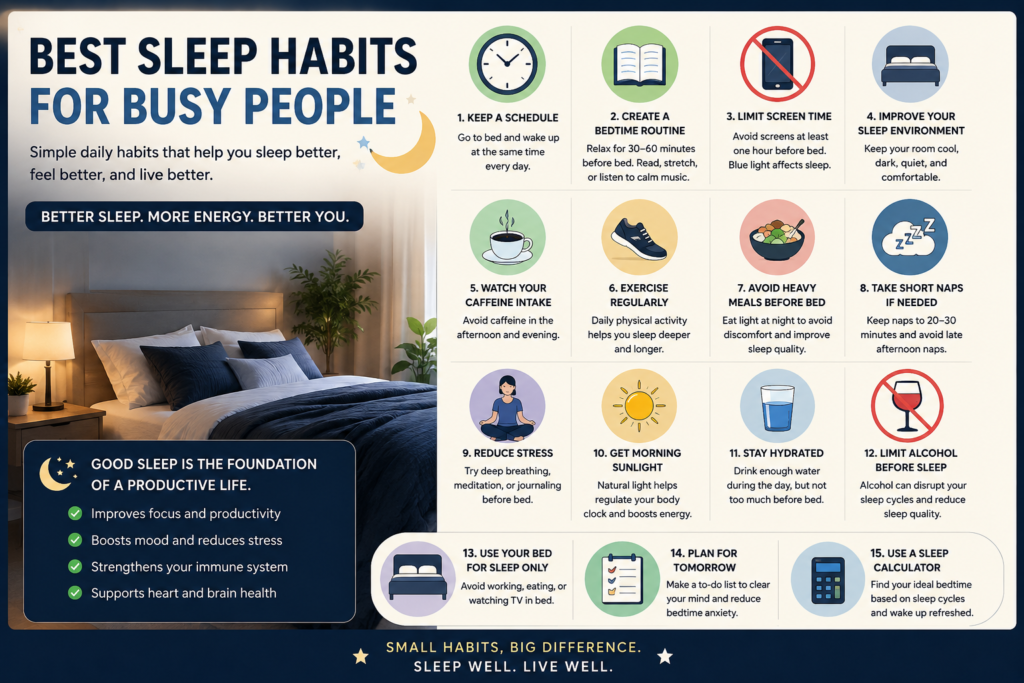
Instead of scrolling through social media until your eyes get tired, create a relaxing bedtime ritual. Make yourself a cup of caffeine-free herbal tea, dim the lights, read a few pages of a book, or listen to calming music. These simple habits tell your brain that it’s time to slow down.
Your Phone Can Wait
It’s tempting to watch “just one more video,” but that often turns into another 30 minutes. Blue light from screens can make it harder for your brain to produce melatonin, the hormone that helps you fall asleep. Try charging your phone across the room instead of beside your bed.
Make Your Bedroom Feel Like a Sleep Sanctuary
A peaceful bedroom can make falling asleep much easier. Keep the room cool, dark, and quiet. Soft bedding, comfortable pillows, blackout curtains, and warm lighting can transform your bedroom into a place your body naturally associates with rest.
Small Changes Beat Big Promises
You don’t have to wake up at 5 a.m. or completely change your lifestyle overnight. Start with one habit. Go to bed 15 minutes earlier this week. Turn your phone off a little sooner. Take a short walk during the day. Small improvements add up over time.
Don’t Let Coffee Steal Tonight’s Sleep
That afternoon coffee might help you finish today’s work, but it could also keep you awake tonight. If you notice you’re tossing and turning at bedtime, try switching to water or herbal tea later in the day and see if your sleep improves.
A Short Nap Can Save Your Day
Feeling exhausted in the afternoon? A quick 20-minute nap can help you recharge without leaving you groggy. Keep naps short and avoid taking them too late in the day so they don’t interfere with your nighttime sleep.
Stress Doesn’t Belong in Bed
If your mind starts racing the moment you lie down, try writing tomorrow’s tasks on paper. Getting those thoughts out of your head can help you relax and fall asleep faster. Deep breathing or a few minutes of meditation can also help quiet a busy mind.
Wake Up with the Sun
Natural morning light helps reset your body’s internal clock. Open the curtains, enjoy breakfast near a window, or take a short walk outside. Morning sunlight can help you feel more awake during the day and sleep better at night.
Sleep Smarter with a Sleep Calculator
Sometimes the problem isn’t how long you sleep—it’s when you wake up. Waking up in the middle of a sleep cycle can leave you feeling groggy, even after eight hours. Using a sleep calculator can help you choose a bedtime that aligns with your natural sleep cycles, making mornings feel much easier.
Being busy doesn’t mean you have to live tired. Better sleep starts with small, consistent habits that fit into your everyday routine. Give your body the rest it deserves, and you’ll likely notice more energy, better focus, and a brighter mood. Remember, success isn’t just about working harder—it’s also about sleeping smarter.