The truth is that baby sleep can feel confusing, especially during the first year. One small schedule change can affect naps, bedtime, and nighttime sleep.
That is why understanding wake windows is one of the most effective ways to improve your baby’s sleep routine naturally.
In this complete guide, you will learn:
- What wake windows are
- Baby wake windows by age
- Sample baby nap schedules
- Signs of overtiredness
- Best bedtime recommendations
- Common sleep mistakes parents make
- How to use a baby sleep calculator effectively
Whether you have a newborn, infant, or toddler, this guide can help you build healthier sleep habits and more predictable naps.
What Are Wake Windows?
A wake window is the amount of time your baby can comfortably stay awake between sleep periods.
Babies become tired much faster than adults because their brains and bodies are developing rapidly. If a baby stays awake too long, cortisol levels can rise, making it harder for them to fall asleep and stay asleep.
Using age-appropriate wake windows helps:
- Improve nap quality
- Reduce overtiredness
- Prevent bedtime battles
- Support healthy development
- Create more consistent routines
- Improve nighttime sleep
Many parents use a baby sleep calculator or nap calculator to track wake windows and create a balanced sleep schedule.
Why Wake Windows Are Important for Baby Sleep
Wake windows are important because babies cannot regulate tiredness the same way adults can.
A baby who misses their ideal sleep window may become:
- Fussy
- Hyperactive
- Difficult to settle
- More likely to wake frequently
Contrary to popular belief, keeping babies awake longer does not always help them sleep better.
In fact, overtired babies often:
- Take shorter naps
- Wake more overnight
- Wake earlier in the morning
- Resist bedtime
Following proper wake windows helps babies fall asleep before becoming overtired.
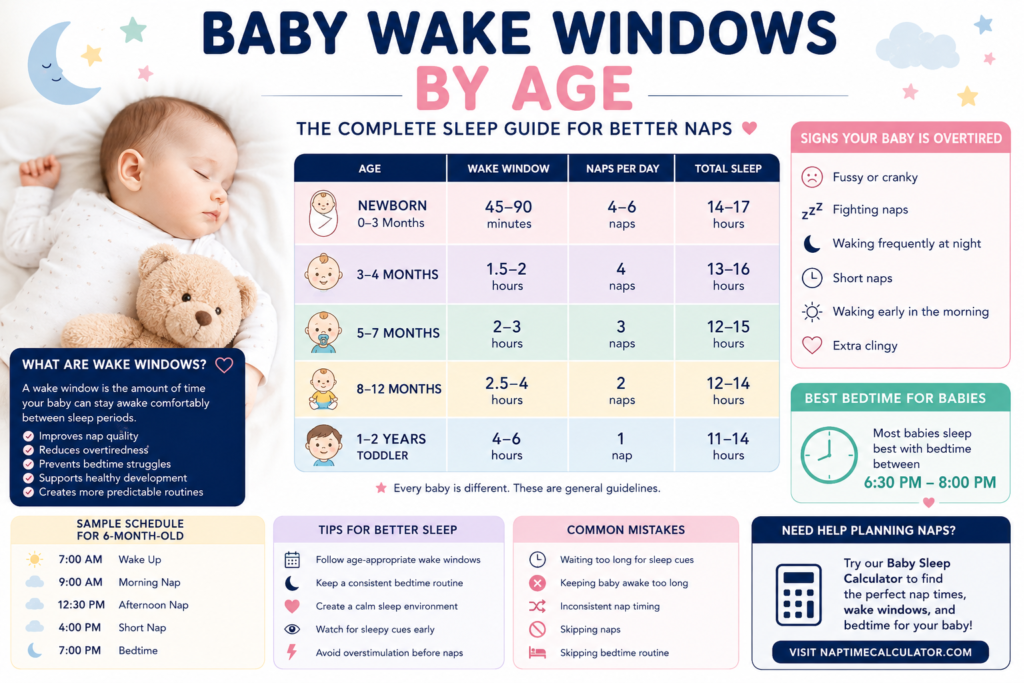
Baby Wake Windows By Age
Newborn Wake Windows (0–3 Months)
- Ideal Wake Window: 45–90 minutes
- Recommended Naps: 4–6 naps daily
- Total Sleep: 14–17 hours daily
Newborns tire very quickly. Feeding, diaper changes, and short periods of play are usually enough stimulation before another nap is needed.
Common Newborn Sleep Cues
- Yawning
- Red eyebrows
- Looking away
- Fussiness
- Eye rubbing
- Hiccups
Many newborn sleep problems happen because babies are kept awake too long.
Newborn Sleep Tips
- Keep stimulation low
- Use dim lighting at night
- Swaddle safely if recommended
- Watch wake windows closely
3–4 Month Wake Windows
- Ideal Wake Window: 1.5–2 hours
- Recommended Naps: 4 naps daily
- Total Sleep: 13–16 hours daily
At this age, babies become more alert and interactive. Sleep patterns begin changing rapidly.
This stage is also associated with the well-known 4-month sleep regression.
Signs of the 4-Month Sleep Regression
- Frequent night waking
- Short naps
- Increased fussiness
- Fighting sleep
Consistent bedtime routines become extremely important during this phase.
5–7 Month Wake Windows
- Ideal Wake Window: 2–3 hours
- Recommended Naps: 3 naps daily
- Total Sleep: 12–15 hours daily
Most babies begin developing more predictable nap schedules during this stage.
Helpful Bedtime Routine Ideas
- Warm bath
- White noise
- Feeding before sleep
- Storytime
- Dim lights
- Consistent bedtime
This is a great age to begin using a bedtime calculator or nap calculator consistently.
8–12 Month Wake Windows
- Ideal Wake Window: 2.5–4 hours
- Recommended Naps: 2 naps daily
- Total Sleep: 12–14 hours daily
Most babies transition to two naps during this stage:
- Morning nap
- Afternoon nap
Overtiredness becomes a major cause of:
- Short naps
- Bedtime resistance
- Early morning waking
Consistency becomes more important than ever.
Toddler Wake Windows (1–2 Years)
- Ideal Wake Window: 4–6 hours
- Recommended Naps: 1 nap daily
- Total Sleep: 11–14 hours daily
Toddlers usually transition to one afternoon nap between 12 and 18 months.
Toddler Sleep Tips
- Keep nap times consistent
- Avoid late naps
- Maintain calming bedtime routines
- Limit overstimulation before bed
Sample Baby Nap Schedule
Example Sleep Schedule for a 6-Month-Old
| Time | Activity |
|---|---|
| 7:00 AM | Wake Up |
| 9:00 AM | Morning Nap |
| 12:30 PM | Afternoon Nap |
| 4:00 PM | Short Nap |
| 7:00 PM | Bedtime |
Every baby is unique, so schedules may vary slightly.
Using a sleep calculator can help parents personalize nap timing based on age and wake windows.
Signs Your Baby Is Overtired
An overtired baby may:
- Cry excessively
- Fight naps
- Wake often overnight
- Become clingy
- Take short naps
- Wake early in the morning
Many parents mistakenly think babies should stay awake longer to sleep better. Unfortunately, overtiredness often makes sleep worse.
Best Bedtime for Babies
Most babies sleep best with bedtime between:
- 6:30 PM
- 8:00 PM
Earlier bedtimes are often helpful for babies who:
- Skip naps
- Wake frequently
- Become overtired easily
Consistent bedtimes support healthy circadian rhythms and better nighttime sleep.
Common Wake Window Mistakes Parents Make
1. Missing Sleep Cues
Some babies stop showing clear sleepy signs once overtired.
2. Keeping Babies Awake Too Long
Long wake windows can increase fussiness and sleep resistance.
3. Inconsistent Nap Timing
Changing schedules every day can disrupt sleep patterns.
4. Skipping Bedtime Routines
Simple calming routines help babies recognize sleep time.
How to Improve Baby Sleep Naturally
Here are simple ways to improve your baby’s naps and bedtime:
- Follow age-appropriate wake windows
- Use consistent bedtime routines
- Keep sleep environments dark and calm
- Avoid overstimulation before naps
- Watch for sleepy cues early
- Use white noise if helpful
- Keep naps consistent
Many families also use baby sleep calculators to simplify sleep planning.
Benefits of Using a Baby Sleep Calculator
A baby sleep calculator helps parents quickly estimate:
- Ideal nap times
- Best bedtime
- Wake windows by age
- Daily sleep schedules
- Nap spacing
Using a calculator can make routines easier and reduce guesswork during busy days.
Frequently Asked Questions
How long should newborns stay awake?
Most newborns stay awake comfortably for about 45–90 minutes.
What happens if wake windows are too long?
Babies can become overtired, making naps and bedtime more difficult.
When do babies drop naps?
Most babies gradually transition:
- 3 naps around 6–8 months
- 2 naps around 8–12 months
- 1 nap around 12–18 months
Do wake windows really work?
Wake windows help many families create more predictable and healthy sleep routines.
What is the best bedtime for babies?
Most babies sleep best between 6:30 PM and 8:00 PM.
Nap timings tweak helps in understanding wake windows can dramatically improve your baby’s sleep schedule.
Small changes in nap timing and bedtime often lead to:
- Better naps
- Easier bedtimes
- Longer nighttime sleep
- Less fussiness
- More predictable routines
Every child is different, so flexibility and consistency both matter.
If you want help planning naps and bedtime schedules, tools like NaptimeCalculator.com can help parents build age-appropriate sleep routines using wake windows and baby sleep calculations.
Disclaimer
This content is for educational and informational purposes only and should not replace professional medical advice. Always consult a healthcare professional or pediatrician regarding concerns about your child’s sleep, health, or development.