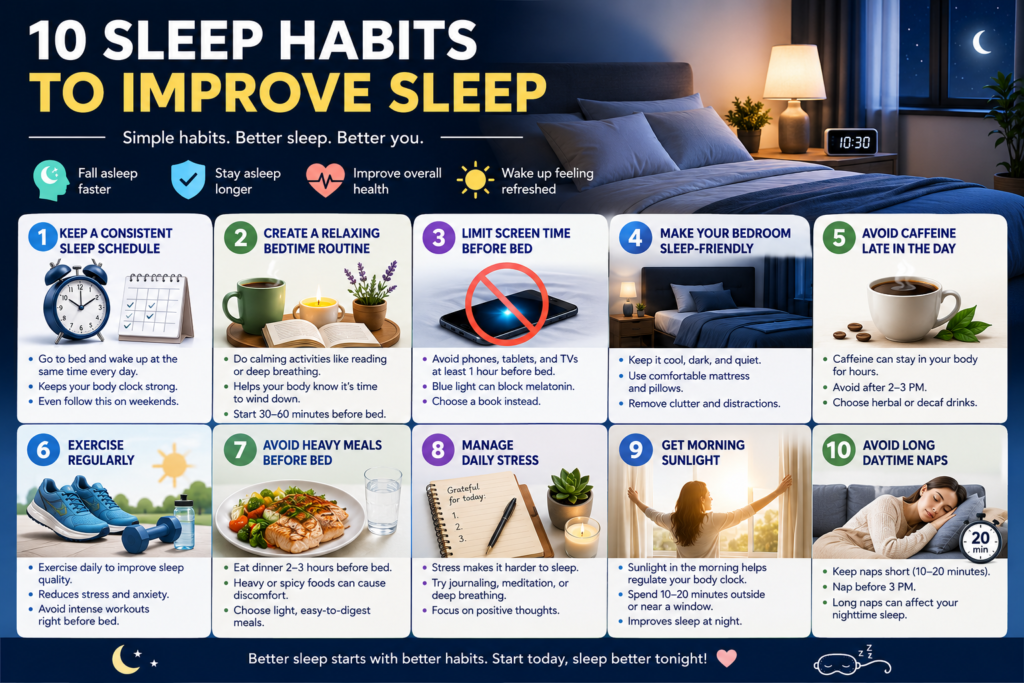
Getting enough sleep isn’t just about spending eight hours in bed. The quality of your sleep depends largely on the habits you follow throughout the day and before bedtime. Even small lifestyle changes can make it easier to fall asleep, stay asleep, and wake up feeling refreshed.
This guide covers 10 proven sleep habits to improve sleep, along with practical examples and simple ways to make each habit part of your daily routine.
1. Keep a Consistent Sleep Schedule
Going to bed and waking up at the same time every day helps regulate your body’s internal clock, also known as the circadian rhythm. When your sleep schedule stays consistent, your body naturally becomes sleepy at bedtime and alert in the morning.
Example
Sarah used to sleep at midnight during the week and 2 AM on weekends. After sticking to a 10:30 PM bedtime every day for three weeks, she noticed she fell asleep faster and woke up without feeling exhausted.
How to Follow This Habit
* Choose a bedtime you can maintain every day.
* Wake up at the same time, including weekends.
* Use reminders 30 minutes before bedtime.
* Avoid sleeping in after a late night.
2. Create a Relaxing Bedtime Routine
Your brain needs time to shift from a busy day into sleep mode. A relaxing bedtime routine signals that it’s time to wind down, reducing stress and helping you fall asleep more easily.
Example :
David spends 20 minutes reading a novel, drinks caffeine-free herbal tea, and practices deep breathing before bed. Within two weeks, his nighttime anxiety decreased significantly.
How to Follow This Habit
* Read a printed book.
* Listen to calming music.
* Practice breathing exercises.
* Stretch gently for 10 minutes.
* Keep the lights dim.
3. Limit Screen Time Before Bed
Phones, tablets, and laptops emit blue light that can interfere with melatonin production, making it harder to fall asleep.
Example
Emma replaced 45 minutes of social media scrolling with reading. She noticed she fell asleep around 20 minutes earlier.
How to Follow This Habit
* Stop using screens at least one hour before bed.
* Charge your phone outside the bedroom.
* Enable Night Shift or Blue Light Filter if screen use is unavoidable.
4. Make Your Bedroom Sleep-Friendly
Your sleeping environment has a direct impact on sleep quality. A cool, dark, and quiet room promotes deeper and more restful sleep.
Example
After installing blackout curtains and lowering the room temperature, Mike stopped waking up several times during the night.
How to Follow This Habit
* Keep the room cool.
* Use blackout curtains.
* Reduce outside noise.
* Invest in a supportive mattress and pillow.
5. Avoid Caffeine Late in the Day
Caffeine can remain in your system for several hours, making it difficult to fall asleep even if you don’t feel energized.
Example
Jessica switched her 5 PM coffee to herbal tea and noticed she fell asleep much faster.
How to Follow This Habit
* Avoid coffee after early afternoon.
* Check energy drinks and sodas for hidden caffeine.
* Choose caffeine-free beverages in the evening.
6. Exercise Regularly
Regular physical activity improves sleep quality by reducing stress and helping regulate your body’s sleep cycle.
Example
After walking 30 minutes every morning, Daniel began sleeping through the night instead of waking repeatedly.
How to Follow This Habit
* Walk daily.
* Try yoga.
* Strength train several times a week.
* Avoid intense exercise right before bedtime.
7. Avoid Heavy Meals Before Bed
Eating large meals close to bedtime may cause indigestion and discomfort that interrupts sleep.
Example
Lisa stopped eating pizza at 10 PM and instead had a light dinner around 7 PM. Her nighttime heartburn disappeared.
How to Follow This Habit
* Finish dinner 2–3 hours before bed.
* Keep evening snacks light.
* Avoid spicy and greasy foods late at night.
8. Manage Daily Stress
Stress keeps your mind active long after your body is tired. Relaxation techniques can help quiet racing thoughts.
Example
John writes three things he’s grateful for every evening. His mind feels calmer when he goes to bed.
How to Follow This Habit
* Keep a journal.
* Practice mindfulness.
* Try meditation apps.
* Focus on slow breathing.
9. Get Morning Sunlight
Natural sunlight helps regulate your circadian rhythm and improves nighttime sleep.
Example
Maria spends 20 minutes outside after breakfast each morning. Within days, she started feeling sleepy at a more consistent bedtime.
How to Follow This Habit
* Walk outdoors after waking.
* Open curtains immediately.
* Eat breakfast near a sunny window.
10. Avoid Long Daytime Naps
While short naps can boost energy, long or late-afternoon naps may make it harder to fall asleep at night.
Example
Alex reduced his afternoon naps from 90 minutes to 20 minutes and found it much easier to sleep at 10 PM.
How to Follow This Habit
* Keep naps between 10–20 minutes.
* Nap before 3 PM.
* Skip naps if you have trouble falling asleep at night.
Frequently Asked Questions
How long does it take to build healthy sleep habits?
Most people notice improvements within two to four weeks of consistently following healthy sleep habit Which sleep habit makes the biggest difference?
Maintaining a consistent sleep schedule is often the most effective change because it helps regulate your body’s internal clock.
Can sleep habits improve insomnia?
Healthy sleep habits can improve mild sleep problems and are a key part of good sleep hygiene. Persistent insomnia should be evaluated by a healthcare professional.
Improving your sleep doesn’t require dramatic changes. Building small, consistent habits—such as keeping a regular sleep schedule, limiting screen time, creating a relaxing bedtime routine, exercising regularly, and managing stress—can lead to better sleep quality over time. Start with one or two habits, practice them daily, and gradually add the others to create a routine that supports restful nights and more energetic days.Make sure to check your daily naptimes and sleep times with sleep analysis tool Naptimecalculator