Sleep Debt: What It Is, How It Affects Your Health, and How to Recover Naturally
Most of us have stayed up late at some point, whether it was to finish work, study for an exam, binge-watch a favorite TV series, or simply scroll through social media. It might not seem like a big deal if it only happens once, but when you repeatedly miss out on the sleep your body needs, those lost hours begin to add up. This is known as sleep debt.
Think of sleep debt like borrowing money from a bank. Every time you sleep less than your body requires, you’re borrowing time that eventually needs to be repaid. While your body is surprisingly good at adapting to occasional sleep loss, carrying too much sleep debt for weeks or months can affect your physical health, mental well-being, and daily performance. The good news is that with the right habits, you can recover and improve your overall sleep quality.
What Is Sleep Debt?
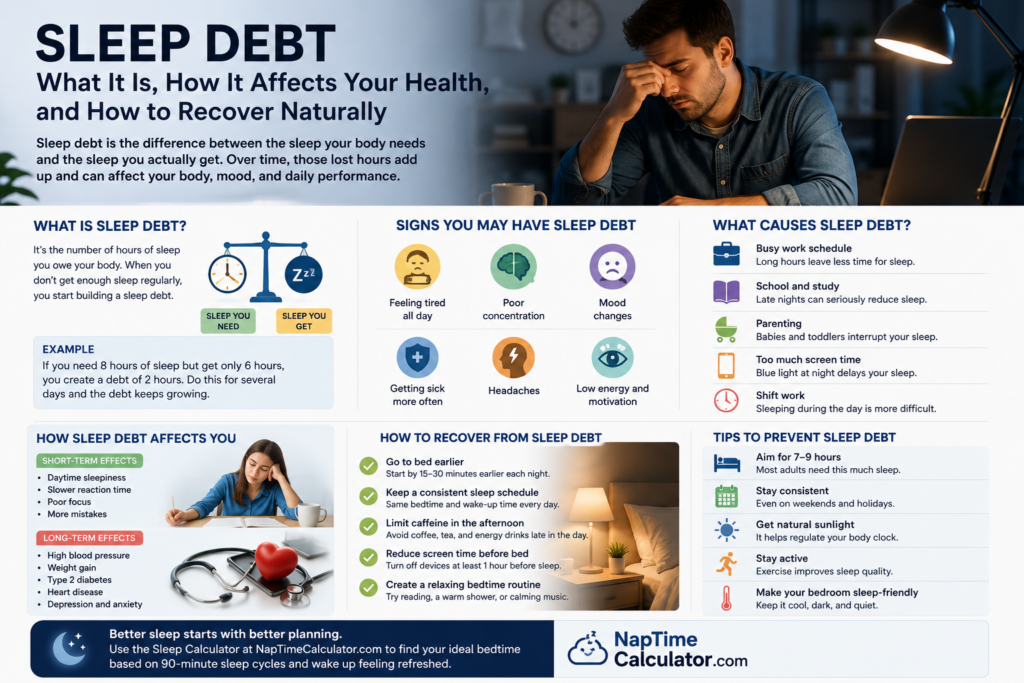
Sleep debt is the difference between the amount of sleep your body needs and the amount you actually get. Most healthy adults need 7 to 9 hours of sleep each night, although individual needs can vary. If you regularly sleep less than that, you begin building sleep debt without even realizing it.
For example, imagine your body needs eight hours of sleep every night. On Monday, you only sleep six hours because you stayed up watching a movie. On Tuesday, you sleep seven hours, and on Wednesday, only six hours again because you had an early meeting. By Thursday morning, you’ve already lost five hours of sleep. Even though you managed to function during those days, your body is still trying to recover from those missing hours.
Why Is Sleep Debt Important?
Sleep isn’t simply a time when your body shuts down. While you’re asleep, your brain is organizing memories, your muscles are repairing themselves, your immune system is becoming stronger, and hormones that regulate appetite, mood, and energy are being balanced. When you consistently lose sleep, these important processes don’t happen as effectively.
At first, the effects may seem small. You may feel slightly tired or need an extra cup of coffee to get through the day. However, if sleep debt continues to build, you may notice changes in your concentration, mood, productivity, and even your overall health. That’s why getting enough sleep isn’t a luxury—it’s one of the most important parts of maintaining a healthy lifestyle.
Common Signs of Sleep Debt
Your body often sends warning signs when it’s not getting enough rest. Learning to recognize these signs can help you make changes before sleep debt becomes a bigger problem.
Feeling Tired Throughout the Day
One of the first signs of sleep debt is constant tiredness. Even after waking up, you may feel like you could easily go back to sleep. Many people rely on coffee or energy drinks to stay awake, but caffeine only masks the problem—it doesn’t replace the sleep your body needs.
Imagine waking up after only five hours of sleep because you stayed up finishing a project. You get through the morning with coffee, but by the afternoon you find yourself yawning during meetings and struggling to stay focused. That’s your body asking for the rest it missed.
Difficulty Concentrating
When you’re carrying sleep debt, your brain doesn’t process information as efficiently. Simple tasks can take longer, and it becomes easier to make mistakes or forget important details.
For example, a student who usually remembers everything from class may suddenly struggle to recall information during an exam after several nights of poor sleep. The knowledge is there, but the brain hasn’t had enough quality sleep to organize and strengthen those memories.
Mood Changes
Have you ever noticed that everything seems more frustrating after a poor night’s sleep? Sleep debt can affect the way your brain processes emotions, making you more irritable, impatient, or anxious than usual.
Something as simple as getting stuck in traffic or waiting in a long line may feel much more stressful when you’re already tired. Many people don’t realize that their mood changes are linked to a lack of sleep rather than the situation itself.
Getting Sick More Often
Your immune system relies on sleep to function properly. During sleep, your body produces proteins and cells that help fight infections. When you consistently sleep too little, your immune system may become less effective, making it easier to catch colds or other illnesses.
What Causes Sleep Debt?
There are many reasons why people accumulate sleep debt, and most are related to busy modern lifestyles its always good to have sleep hygiene
Long working hours often leave little time for proper rest. Students may stay up late preparing for exams or completing assignments. Parents of young children frequently experience interrupted sleep because babies and toddlers wake during the night. Others lose sleep simply because they spend too much time on their phones before bed.
Shift workers face an even greater challenge. Sleeping during the day can be difficult because of sunlight, noise, and an internal body clock that’s naturally programmed to stay awake during daylight hours.
How Sleep Debt Affects Your Health
Missing sleep occasionally isn’t usually harmful, but long-term sleep debt can have serious consequences.
In the short term, you may experience slower reaction times, reduced productivity, poor decision-making, and lower energy levels. These effects can increase the risk of accidents while driving or working.
Over months or years, chronic sleep debt has been linked to higher risks of obesity, high blood pressure, type 2 diabetes, heart disease, depression, and anxiety. While sleep alone doesn’t cause these conditions, getting enough quality sleep is an important part of maintaining good health.
Can You Catch Up on Lost Sleep?
Many people believe they can simply sleep until noon on the weekend to erase an entire week’s worth of poor sleep. While sleeping longer can help you recover from a small amount of sleep debt, it isn’t a perfect solution.
For example, if you only sleep five hours every weekday and then sleep twelve hours on Saturday, you’ll probably feel better temporarily. However, your body’s internal clock works best when you maintain a consistent sleep schedule. Large differences between weekday and weekend sleep can actually make it harder to fall asleep on Sunday night.
How to Recover From Sleep Debt
The best way to recover from sleep debt is to gradually return to a healthy sleep routine rather than trying to make up all the lost sleep at once.
Start by going to bed 15 to 30 minutes earlier than usual. Small adjustments are easier for your body to adapt to than sudden changes.
Keeping the same bedtime and wake-up time every day is also important. Consistency helps regulate your body’s internal clock, making it easier to fall asleep naturally.
Reducing caffeine in the afternoon, limiting screen time before bed, and creating a relaxing bedtime routine can also improve sleep quality. Even simple habits like reading a book, taking a warm shower, or dimming the lights before bedtime can signal to your brain that it’s time to rest.
How to Prevent Sleep Debt
Preventing sleep debt is much easier than recovering from it. The key is to make sleep a daily priority instead of something you sacrifice when life gets busy.
Aim for seven to nine hours of sleep each night, keep your bedroom cool and quiet, avoid heavy meals just before bedtime, and try to stay active during the day. If you’re unsure what time you should go to bed, using a sleep calculator can help you plan your bedtime around natural sleep cycles.
Remember that consistency matters more than perfection. Missing sleep once in a while is normal, but making healthy sleep habits part of your routine can have lasting benefits.
Frequently Asked Questions
Is sleep debt real?
Yes. Sleep debt is a real concept used to describe the gap between the amount of sleep you need and the amount you actually get. The more sleep you miss over time, the larger your sleep debt becomes.
Can naps repay sleep debt?
A short nap can help you feel more alert and improve concentration, but it cannot fully replace the benefits of a full night’s sleep. Naps work best as a temporary boost rather than a long-term solution.
How long does it take to recover from sleep debt?
Recovery depends on how much sleep you’ve lost. A small amount of sleep debt may improve after one or two nights of quality sleep, while months of chronic sleep deprivation may take several weeks of consistent healthy sleep habits.
How do I know if I’m getting enough sleep?
If you wake up feeling refreshed, stay alert during the day, and don’t constantly rely on caffeine to stay awake, you’re likely getting the sleep your body needs.
Sleep debt is real
Sleep debt is easy to accumulate but often overlooked until it starts affecting your health, mood, and productivity. While modern life can make it difficult to get enough rest every night, even small improvements to your sleep routine can make a noticeable difference.
Instead of thinking of sleep as time lost, think of it as an investment in your health. Better sleep can improve your energy, sharpen your memory, strengthen your immune system, and help you feel your best each day.
If you’re unsure when to go to bed, try using the free NapTimeCalculator.com Sleep Calculator. It helps you plan your bedtime around natural sleep cycles, making it easier to wake up feeling refreshed and ready for the day.