We’ve all had those mornings.
You sleep for what feels like enough hours, but somehow you still wake up tired, groggy, and already waiting for your first coffee. Meanwhile, other days you sleep less and feel completely fine.
A lot of the time, it’s not just about how long you sleep — it’s about when you sleep.
Your body actually follows a natural rhythm that affects your energy, focus, and sleep quality. When your sleep schedule works with your body instead of against it, waking up becomes much easier.
Let’s talk about the best times to sleep and wake up naturally and how small changes can make a big difference.
Your Body Has a Natural Clock
Your body runs on something called a circadian rhythm. Think of it as your internal body clock.
This clock helps control:
- When you feel sleepy
- When you feel awake
- Your energy levels
- Hormones
- Body temperature
That’s why many people naturally start feeling tired at night and more awake after sunrise.
When your sleep schedule constantly changes, your body clock gets confused — and that can leave you feeling exhausted even after a full night’s sleep.
So… What’s the Best Time to Sleep?
For most people, going to bed somewhere between:
- 9:30 PM and 11:00 PM
works best.
These hours usually match your body’s natural melatonin production. Melatonin is the hormone that helps your body prepare for sleep.
Of course, everyone is different. Some people naturally stay up later while others feel sleepy earlier. The goal is to find a schedule you can follow consistently.
What’s the Best Time to Wake Up?
A healthy wake-up time for many people is usually:
- Between 6:00 AM and 8:00 AM
Waking up around the same time every day helps your body build a steady rhythm. After a while, you may even start waking up naturally before your alarm.
And honestly, that’s one of the best feelings.
Why Some Mornings Feel Worse Than Others
Have you ever woken up in the middle of a deep sleep and felt completely terrible?
That happens because sleep works in cycles.
Each sleep cycle lasts about 90 minutes and includes:
- Light sleep
- Deep sleep
- REM sleep
If your alarm goes off during deep sleep, you’re more likely to feel groggy and tired.
That’s why sleep calculators and nap calculators can actually help. They try to time your wake-up around the end of a sleep cycle instead of the middle of one.
A Simple Sleep Trick That Helps
Instead of only focusing on “8 hours,” try thinking in sleep cycles.
Many people feel better after:
- 7.5 hours of sleep
- or 9 hours of sleep
because those line up more naturally with complete sleep cycles.
Signs Your Sleep Schedule Is Working
A healthy sleep routine usually looks like this:
- You wake up feeling rested most days
- You don’t rely heavily on caffeine
- You fall asleep fairly easily
- Your energy stays more stable during the day
- You don’t constantly feel exhausted
Signs You Might Need Better Sleep Habits
You may need to adjust your sleep routine if:
- You feel tired every morning
- You stay up very late often
- You scroll on your phone for hours before bed
- You sleep at different times every night
- You struggle to wake up consistently
The good news is that even small changes can help a lot.
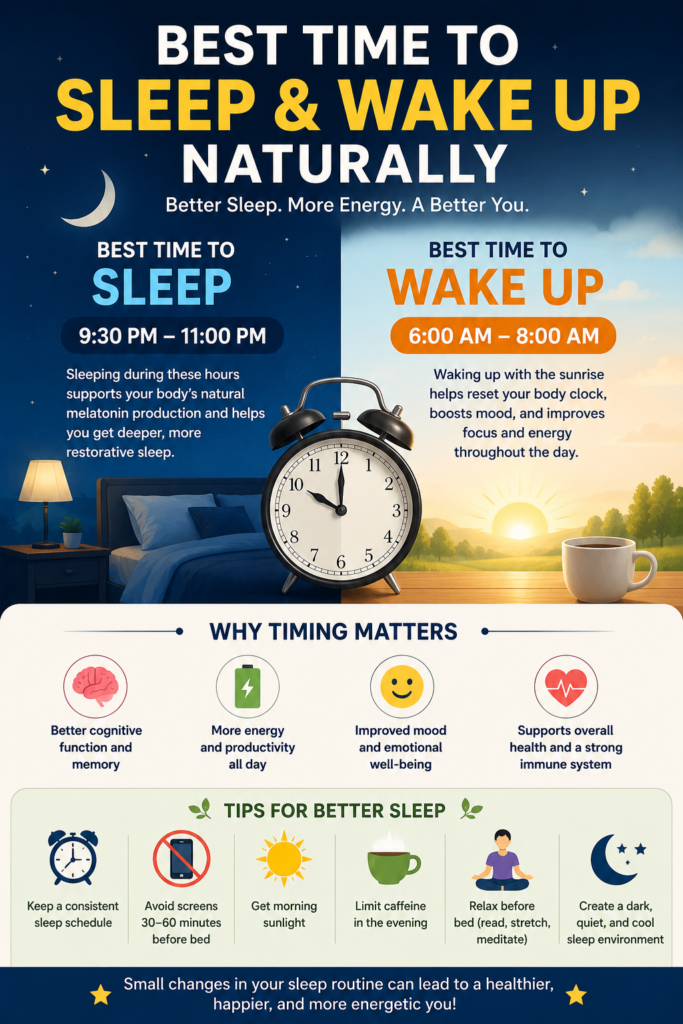
Tips to Sleep Better Naturally
Keep Your Sleep Schedule Consistent
Try going to bed and waking up at roughly the same time every day — even weekends if possible.
Put the Phone Away Before Bed
Blue light from screens can make it harder for your brain to relax.
Even 30 minutes away from screens before sleep can help.
Get Sunlight in the Morning
Morning sunlight helps reset your body clock and improves alertness naturally.
Don’t Drink Too Much Caffeine Late in the Day
Caffeine can stay in your system longer than most people realize.
Create a Relaxing Night Routine
Simple things like reading, stretching, or listening to calm music can signal your brain that it’s time to sleep.
There isn’t one “perfect” bedtime for everyone, but most people feel their best when they sleep consistently and follow their body’s natural rhythm.
For many adults, sleeping between 9:30 PM and 11:00 PM and waking between 6:00 AM and 8:00 AM is a great starting point.
The most important thing is consistency.
Better sleep doesn’t always require huge changes. Sometimes adjusting your bedtime by even 30 minutes can improve your energy, focus, and mood more than you expect.
And if you want to make things even easier, using a sleep or nap calculator can help you plan sleep around your natural sleep cycles instead of guessing.