Find the Best Time to Sleep Between Shifts
Working outside the traditional 9-to-5 schedule can make getting quality sleep a challenge. Whether you’re a nurse, healthcare worker, police officer, firefighter, factory employee, truck driver, or customer support agent, irregular work hours often disrupt your body’s natural sleep-wake cycle.
The good news is that you don’t have to guess when to sleep. A shift work sleep calculator can help you determine the best bedtime and wake-up time based on your work schedule, helping you wake up feeling more refreshed and alert.
In this guide, you’ll learn how shift work affects sleep, how to build a healthier sleep routine, and how to calculate the best time to sleep between shifts.
Why Is Shift Work So Hard on Your Body?
Your body follows a circadian rhythm, also known as your internal body clock. This biological clock is naturally programmed to make you feel awake during daylight hours and sleepy after dark.
When you work overnight or rotating shifts, your body receives mixed signals. Even if you’re exhausted after work, sunlight, noise, and your natural body clock can make it difficult to fall asleep.
This can lead to:
- Difficulty falling asleep
- Frequent waking during the day
- Feeling tired during work
- Poor concentration
- Mood changes
- Lower productivity
Over time, chronic sleep deprivation may increase the risk of high blood pressure, obesity, diabetes, and heart disease.
How a Shift Work Sleep Calculator Helps
Instead of simply counting hours, a sleep calculator works with your desired wake-up time and complete sleep cycles.
A typical sleep cycle lasts about 90 minutes. Waking at the end of a cycle often leaves you feeling less groggy than waking halfway through one.
For example, if you finish work at 7:00 AM and need to wake up at 3:00 PM, your ideal bedtime should allow enough time for complete sleep cycles.
Using a sleep calculator removes much of the guesswork and helps create a more consistent routine.
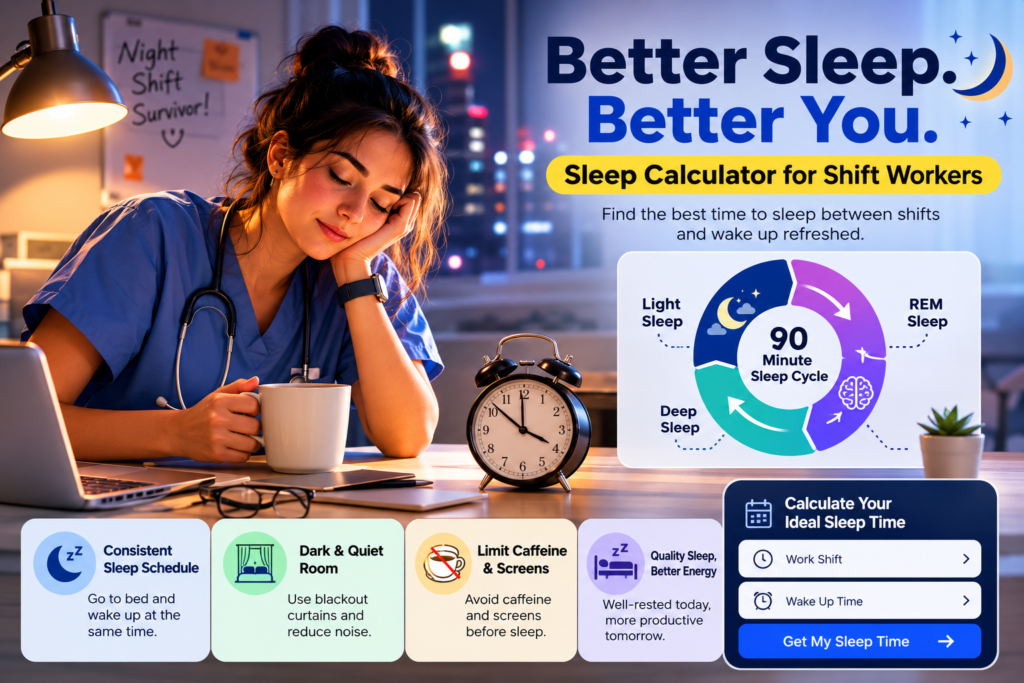
Best Sleep Schedule for Night Shift Workers
Suppose your schedule is:
- Work: 11:00 PM – 7:00 AM
- Arrive home: 7:30 AM
A healthy routine could look like this:
- Light breakfast
- Blackout curtains closed
- Cool bedroom
- Sleep from 8:30 AM to 3:30 PM
- Healthy meal after waking
- Short walk or light exercise before work
Keeping the same sleep schedule—even on days off when possible—helps your body adjust.
Best Sleep Schedule for Rotating Shifts
Rotating shifts are more challenging because your body never fully adapts.
To reduce fatigue:
- Shift your bedtime gradually before schedule changes.
- Take a 20–30 minute nap before overnight shifts.
- Stay hydrated during work.
- Avoid caffeine within six hours of your planned bedtime.
- Use bright light during your shift and limit sunlight exposure after work.
How Long Should Shift Workers Sleep?
Most adults need 7–9 hours of sleep every 24 hours.
If getting one long sleep period isn’t possible, many shift workers benefit from splitting sleep into two sessions.
For example:
- Main sleep: 5–6 hours
- Nap: 90 minutes before work
This approach can improve alertness while still providing enough total sleep.
Tips for Sleeping Better During the Day
Make Your Bedroom Dark
Install blackout curtains or wear a sleep mask to block daylight.
Keep the Room Cool
A temperature between 16°C and 19°C (60°F–67°F) is ideal for most people.
Reduce Noise
Use earplugs, white noise, or a fan to block daytime sounds.
Turn Off Notifications
Silence your phone and ask family members to avoid interruptions while you sleep.
Avoid Heavy Meals Before Bed
Large meals can make falling asleep more difficult. Choose a light, balanced meal instead.
Is It Okay to Nap Before Work?
Yes. Strategic naps can improve alertness and reduce fatigue.
General recommendations:
- 20-minute nap: Quick energy boost.
- 90-minute nap: One complete sleep cycle, helping you wake feeling more refreshed.
Avoid long naps immediately before sleeping for the day, as they may make it harder to fall asleep.
Common Mistakes Shift Workers Make
Many people unknowingly reduce their sleep quality by:
- Changing sleep times every day.
- Drinking coffee too late in the shift.
- Sleeping with sunlight entering the room.
- Using phones or tablets in bed.
- Staying awake too long after arriving home.
Small changes to your routine can make a noticeable difference.
How to Calculate the Best Time to Sleep
To find your ideal bedtime:
- Decide when you need to wake up.
- Count backward in 90-minute sleep cycles.
- Allow about 15 minutes to fall asleep.
- Aim for five or six complete sleep cycles whenever possible.
A sleep calculator can automate these calculations and help you build a schedule that fits your shifts.
Frequently Asked Questions
Can shift workers stay healthy?
Yes. Consistent sleep, healthy eating, regular exercise, and good sleep hygiene can reduce many of the challenges associated with shift work.
Should I sleep immediately after work?
Most experts recommend going to bed as soon as practical after finishing a night shift to help your body get adequate rest.
Are blackout curtains worth it?
Yes. Blocking daylight can significantly improve daytime sleep quality for many shift workers.
Can naps replace a full night’s sleep?
Naps can help reduce fatigue, but they shouldn’t regularly replace getting enough total sleep over a 24-hour period.
Working shifts doesn’t mean you have to sacrifice good sleep. By understanding your body’s natural sleep cycles and following a consistent routine, you can improve your energy, focus, and overall well-being.
Use the NapTimeCalculator.com Sleep Calculator to find the best bedtime based on your work schedule and wake-up time. Even small improvements in your sleep routine can make a big difference over time.