How Much REM Sleep Do You Need?
Have you ever slept for eight hours but still felt exhausted the next morning? Or maybe you only slept for six hours and somehow woke up feeling surprisingly refreshed. The secret isn’t always how long you sleep—it’s the quality of your sleep.
One of the biggest factors behind quality sleep is REM (Rapid Eye Movement) sleep. This stage of sleep helps your brain process memories, regulate emotions, improve learning, and even boost creativity. While many people focus on getting enough hours of sleep, getting enough REM sleep is just as important.
In this guide, you’ll learn what REM sleep is, how much you need at different ages, why it matters, and simple ways to improve it naturally.
What Is REM Sleep?
REM stands for Rapid Eye Movement, one of the four stages of the sleep cycle. It usually begins about 90 minutes after you fall asleep and repeats several times throughout the night. Each REM stage becomes longer as the night progresses.
During REM sleep, your brain is highly active while most of your muscles remain temporarily relaxed. This prevents you from physically acting out your dreams.
What Happens During REM Sleep?
During REM sleep:
- Your eyes move rapidly beneath your eyelids.
- Your brain processes information from the day.
- Most vivid dreams occur.
- Memories are stored.
- Learning improves.
- Creativity increases.
- Your body prepares for the next day.
Think of REM sleep as your brain’s “overnight maintenance.” While your body rests, your brain organizes everything you’ve experienced throughout the day.
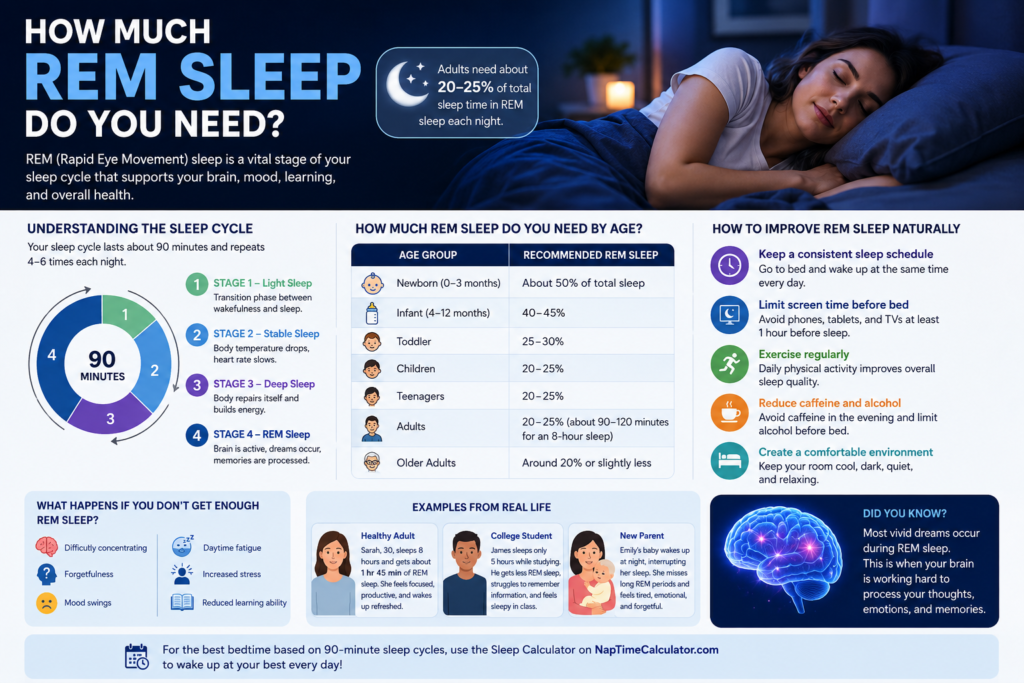
Example
Imagine you’ve spent the day learning a new language. While you’re asleep, your brain uses REM sleep to organize and strengthen those new memories, making it easier to remember vocabulary the next day.
Why Is REM Sleep Important?
Getting enough REM sleep benefits almost every part of your daily life.
It Improves Memory
During REM sleep, your brain sorts through information, keeping important memories while removing unnecessary details.
Example
Sarah is preparing for a job interview. She spends the evening practicing answers and then gets a full eight hours of sleep. The next morning, she remembers her responses much more clearly because her brain strengthened those memories during REM sleep.
- It Helps You Learn Faster
Whether you’re studying for school or learning a new skill, REM sleep helps your brain absorb new information.
Example
James studies for his college exams until midnight but only sleeps for five hours. Although he spent hours studying, he struggles to remember what he learned because he didn’t get enough REM sleep.
It Supports Emotional Health
REM sleep helps your brain process emotions, making it easier to manage stress and stay emotionally balanced.
Example
After several nights of poor sleep, you might notice that small problems feel much bigger than usual. That’s because your brain hasn’t had enough time to process emotions during REM sleep.
It Boosts Creativity
Many creative ideas come after a good night’s sleep.
Example
A graphic designer spends hours trying to solve a design problem without success. After sleeping well, they wake up with a completely new idea that solves the problem within minutes.
- How Much REM Sleep Do You Need?
The amount of REM sleep you need changes as you grow older.
- REM Sleep by Age
| Age Group | Recommended REM Sleep |
|---|---|
| Newborn (0–3 months) | About 50% of total sleep |
| Infant (4–12 months) | 40–45% |
| Toddler | 25–30% |
| Children | 20–25% |
| Teenagers | 20–25% |
| Adults | 20–25% |
| Older Adults | Around 20% |
Most healthy adults need 7–9 hours of sleep each night, which usually provides 90 to 120 minutes of REM sleep.
Example
If Emma sleeps for 8 hours, she will likely spend around 1 hour and 45 minutes to 2 hours in REM sleep. This helps her stay focused at work, improves her memory, and gives her more energy throughout the day.
- Understanding the Sleep Cycle
Your body doesn’t go directly into REM sleep. Instead, it moves through several sleep stages in a repeating cycle.
A complete sleep cycle lasts about 90 minutes.
- Stage 1 – Light Sleep
This is the transition from being awake to asleep.
Stage 2 – Stable Sleep
Your heart rate slows, your muscles relax, and your body prepares for deeper sleep.
Stage 3 – Deep Sleep
Your body repairs muscles, strengthens your immune system, and restores energy.
Stage 4 – REM Sleep
Your brain becomes highly active, dreams occur, and memories are strengthened.
Example
Think of your sleep like watching a movie. If someone pauses the movie every 20 minutes, you’ll never enjoy the full story.
Sleep works the same way.
Every time your sleep is interrupted, your body may struggle to complete a full sleep cycle. Since REM sleep happens more often toward the end of each cycle, waking up repeatedly can reduce the amount of REM sleep you get.
What Happens If You Don’t Get Enough REM Sleep?
When your body doesn’t get enough REM sleep, you may notice several changes.
Common Symptoms :
- Feeling tired even after sleeping
- Difficulty concentrating
- Forgetfulness
- Mood swings
- Irritability
- Low energy
- Daytime sleepiness
Example
Imagine staying awake until 2:00 a.m. watching your favorite TV series before waking up at 6:30 a.m. for work.
The next day you may:
- Forget where you left your phone.
- Find it harder to focus during meetings.
- Feel sleepy all afternoon.
- Become irritated by small problems.
These are common signs that your brain didn’t get enough restorative sleep.
What Can Reduce REM Sleep?
Several everyday habits can interfere with REM sleep.
Alcohol Before Bed
Although alcohol may make you sleepy, it often reduces REM sleep later in the night.
Too Much Caffeine
Coffee and energy drinks consumed late in the day can delay sleep.
- Stress
High stress levels can make it harder to stay asleep long enough to complete healthy sleep cycles.
- Poor Sleep Schedule
Going to bed at different times every night confuses your body’s internal clock.
- Sleep Disorders
Conditions like sleep apnea can interrupt sleep and reduce REM sleep.
How to Improve REM Sleep Naturally
The good news is that improving REM sleep often starts with simple lifestyle changes.
Keep a Consistent Sleep Schedule
Try to go to bed and wake up at the same time every day.
Example
If you normally sleep at 10:30 p.m., try to stick with that schedule—even on weekends. Your body will learn when it’s time to sleep, making it easier to complete healthy sleep cycles.
Get Enough Total Sleep
Most adults should aim for 7–9 hours every night.
The longer you sleep, the more opportunities your body has to enter REM sleep.
- Reduce Screen Time Before Bed
Blue light from phones and tablets can delay the production of melatonin, the hormone that helps you sleep.
Example Evening Routine
7:00 p.m. – Finish dinner.
8:00 p.m. – Go for a short walk.
9:00 p.m. – Put away your phone and dim the lights.
9:30 p.m. – Read a book.
10:00 p.m. – Relax and prepare for bed.
10:30 p.m. – Go to sleep.
- Exercise Regularly
Regular physical activity improves both deep sleep and REM sleep.
Even a 30-minute walk during the day can make a difference.
- Make Your Bedroom Comfortable
Keep your bedroom:
- Cool
- Dark
- Quiet
- Comfortable
These simple changes can improve overall sleep quality.
- Can Smartwatches Measure REM Sleep?
Many smartwatches estimate REM sleep using your heart rate and body movement.
Example
Your smartwatch may display:
- Total Sleep: 8 hours
- Deep Sleep: 1 hour 40 minutes
- REM Sleep: 1 hour 50 minutes
- Light Sleep: 4 hours 30 minutes
These numbers suggest you’re getting a healthy amount of REM sleep. However, remember that fitness trackers provide estimates rather than medical-grade measurements.
- Frequently Asked Questions
- Is One Hour of REM Sleep Enough?
For most adults, one hour is slightly below the average. Sleeping 7–9 hours usually provides 90–120 minutes of REM sleep.
Example
If Ahmed sleeps 7½ hours and his smartwatch estimates 95 minutes of REM sleep, that’s generally considered healthy.
Can You Get Too Much REM Sleep?
Occasionally spending more time in REM sleep isn’t usually a concern. However, sudden changes in your sleep pattern should be discussed with a healthcare professional.
Does Everyone Dream During REM Sleep?
Yes. Most vivid dreams happen during REM sleep, although many people don’t remember them after waking up.
Which Sleep Stage Is the Most Important?
Every stage of sleep has an important role.
- Deep sleep helps your body recover.
- REM sleep supports memory, learning, creativity, and emotional health.
Together, they help you wake up feeling refreshed.
REM sleep is much more than the stage where you dream—it’s essential for your brain, memory, emotions, and overall health. Most adults need about 90 to 120 minutes of REM sleep each night, which usually happens naturally when you get 7–9 hours of quality sleep.
If you often wake up feeling tired, try improving your bedtime routine, limiting caffeine late in the day, and maintaining a consistent sleep schedule. Small changes can make a big difference over time.
For even better sleep planning, use the free Sleep Cycle Calculator on NapTimeCalculator.com. It helps you choose the best bedtime and wake-up time based on natural 90-minute sleep cycles, giving you a better chance of waking up refreshed and energized every morning.