A Simple Guide to Better Sleep
Have you been staying up too late and finding it difficult to wake up in the morning? You’re not alone. Many people struggle with an irregular sleep schedule because of work, travel, stress, late-night screen time, or simply staying up too late on weekends. The good news is that your body can adjust with the right habits and a little patience. If you’re wondering how to reset your sleep schedule, this guide will walk you through practical steps that can help you sleep better and wake up feeling refreshed.
Disclosure: This article contains affiliate links. If you purchase through these links, I may earn a small commission at no extra cost to you. I only recommend products I believe may be useful to readers.
Your body follows a natural 24-hour cycle called the circadian rhythm, which controls when you feel awake and when you feel sleepy. When this internal clock is disrupted, falling asleep at the right time becomes difficult. Fortunately, you can gradually train your body to return to a healthy routine by making a few consistent changes to your daily habits.
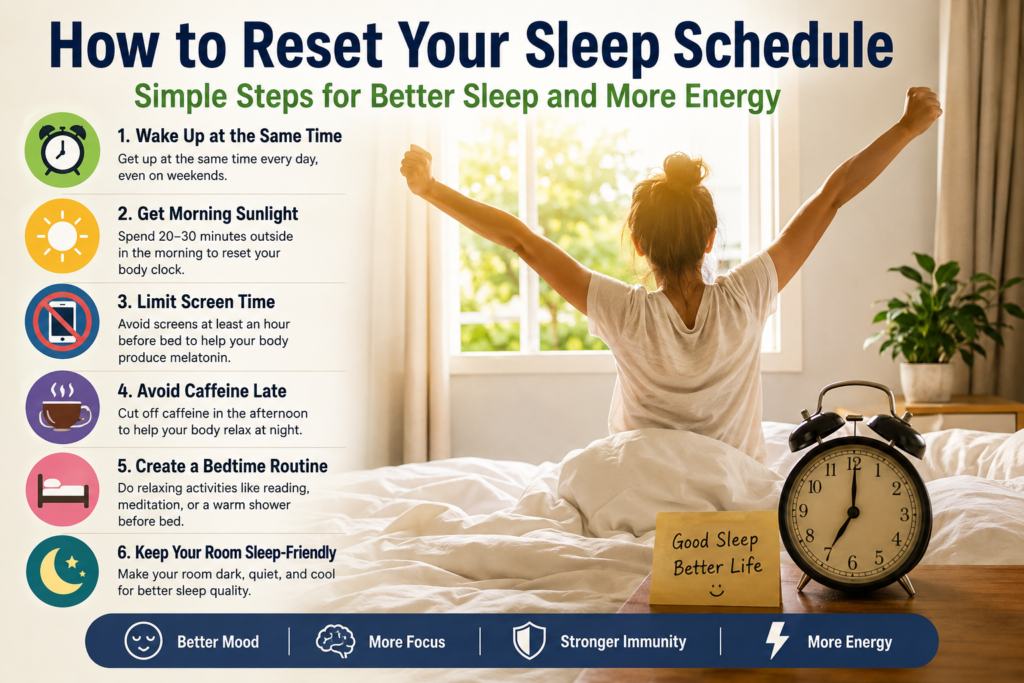
One of the most effective ways to reset your sleep schedule is to wake up at the same time every day, including weekends. It might be tempting to sleep in after a late night, but doing so can delay your body clock even further. Getting out of bed at a consistent time helps your brain recognize when it’s time to be awake and when it’s time to prepare for sleep later in the evening.
Instead of trying to go to bed several hours earlier all at once, move your bedtime gradually by about 15 to 30 minutes each night until you reach your desired sleep time. This slow adjustment gives your body enough time to adapt naturally without making it difficult to fall asleep. Small, consistent changes are much more successful than dramatic ones.
Morning sunlight plays a huge role in improving your sleep. Spending at least 20 to 30 minutes outside shortly after waking up helps signal your brain that the day has started. Natural light regulates your circadian rhythm, increases alertness, improves mood, and makes it easier to fall asleep at night. Even a short walk outdoors can make a noticeable difference over time.
Another important habit is limiting screen time before bed. Smartphones, tablets, televisions, and computers emit blue light, which suppresses the production of melatonin—the hormone that helps your body feel sleepy. Try turning off electronic devices at least one hour before bedtime. Instead, read a book, listen to calming music, meditate, or enjoy another relaxing activity that prepares your mind for sleep.
Your daily habits also influence how well you sleep. Avoid drinking coffee, tea, energy drinks, or other caffeinated beverages late in the afternoon or evening, as caffeine can stay in your system for several hours. Regular physical activity can also improve sleep quality, but it’s best to finish intense workouts at least three hours before bedtime. A relaxing bedtime routine, such as taking a warm shower, dimming the lights, or reading a few pages of a book, signals to your brain that it’s time to wind down.
Creating a comfortable sleep environment can also make a significant difference. Keep your bedroom cool, dark, and quiet whenever possible. Comfortable pillows and a supportive mattress can improve sleep quality, while blackout curtains and reducing unnecessary noise can help you stay asleep throughout the night. Reserve your bed for sleep and relaxation rather than working or scrolling through social media.
If you enjoy daytime naps, try to keep them short—around 20 to 30 minutes—and avoid napping late in the afternoon. Long or late naps can reduce your body’s natural sleep pressure, making it harder to fall asleep when bedtime arrives.
Many people ask how long it takes to reset a sleep schedule. For most people, noticeable improvements occur within three to seven days, although a complete adjustment may take up to two weeks depending on how disrupted the schedule has become. The key is consistency. Even if you have an occasional late night, returning to your regular wake-up time will help keep your body clock on track.
Resetting your sleep schedule doesn’t require expensive products or complicated techniques. By maintaining a consistent wake-up time, gradually adjusting your bedtime, getting plenty of morning sunlight, limiting screen time before bed, exercising regularly, and practicing good sleep hygiene, you can improve both the quality and quantity of your sleep. Healthy sleep supports better concentration, improved mood, stronger immunity, and increased energy throughout the day. Start with one or two changes today, stay consistent, and your body will gradually adapt to a healthier and more refreshing sleep routine.