Learn why bedtime hygiene is important for better sleep. Discover practical bedtime hygiene tips for babies, children, and adults to improve sleep quality and overall health.
Bedtime Hygiene: The Secret to Better Sleep for Babies, Kids, and Adults
Sleep is one of the most important parts of a healthy life, yet many people struggle to get enough quality rest. While factors such as age, health, and daily routines affect sleep, one often overlooked aspect is bedtime hygiene. Developing good bedtime hygiene habits can improve sleep quality, help you fall asleep faster, and support overall health and well-being.
What Is Bedtime Hygiene?
Bedtime hygiene, also known as sleep hygiene, refers to the habits and routines that promote healthy and restful sleep. These practices help prepare the mind and body for sleep and create an environment that supports uninterrupted rest throughout the night.
Whether you’re caring for a newborn, helping a toddler develop a sleep routine, or improving your own sleep habits, bedtime hygiene plays a critical role.
Why Is Bedtime Hygiene Important?
Good bedtime hygiene can provide many benefits, including:
- Falling asleep more quickly
- Sleeping longer without interruptions
- Improving mood and emotional well-being
- Supporting healthy growth and development in children
- Enhancing concentration and productivity
- Strengthening the immune system
- Reducing daytime fatigue
Poor bedtime habits, on the other hand, can lead to difficulty falling asleep, frequent night wakings, and poor sleep quality.
Essential Bedtime Hygiene Habits
1. Maintain a Consistent Sleep Schedule
Going to bed and waking up at the same time every day helps regulate your body’s internal clock. Consistency is especially important for babies and young children.
2. Create a Relaxing Bedtime Routine
A calming routine signals that it’s time to sleep. Consider activities such as:
- Reading a book
- Taking a warm bath
- Listening to soothing music
- Gentle stretching
- Quiet family time
For babies, feeding, cuddling, and reading can become comforting sleep cues.
3. Limit Screen Time Before Bed
Phones, tablets, televisions, and computers emit blue light that can interfere with the body’s natural production of melatonin, the hormone responsible for sleep.
Try turning off screens at least 30 to 60 minutes before bedtime.
4. Optimize the Sleep Environment
A comfortable sleep environment can make a big difference.
Ideal sleep conditions include:
- A cool room temperature
- Minimal noise
- Darkness or dim lighting
- Comfortable bedding
For babies, always follow safe sleep guidelines and keep the sleep area free of loose blankets and toys.
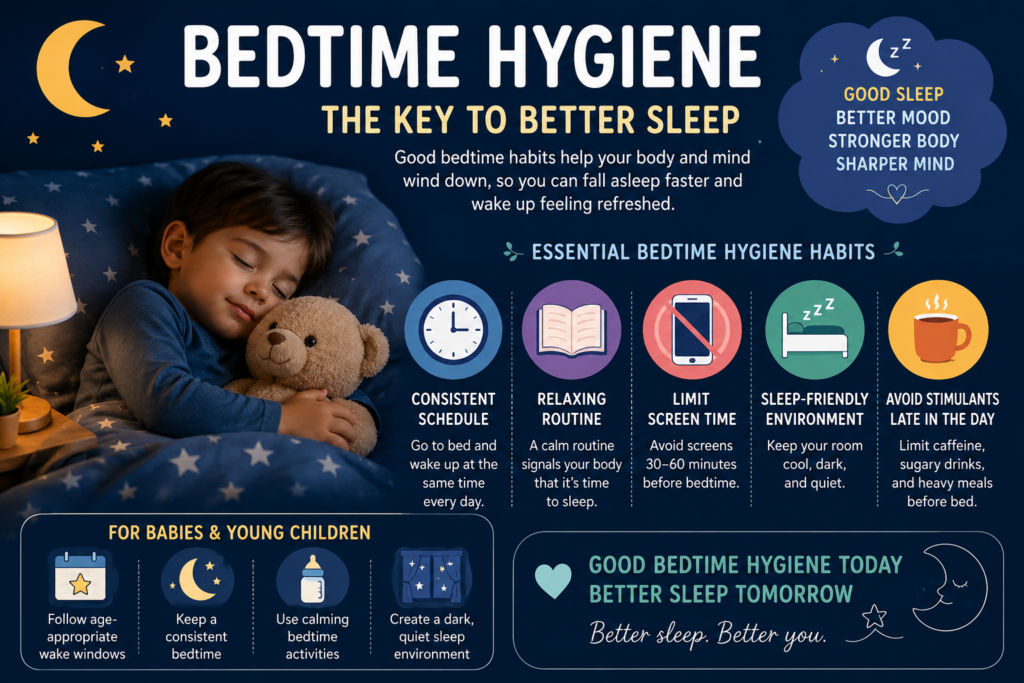
5. Avoid Stimulants Late in the Day
Caffeine, sugary drinks, and heavy meals close to bedtime may make it harder to fall asleep.
Choose lighter evening snacks and avoid stimulants several hours before bedtime.
Bedtime Hygiene for Babies
Babies thrive on predictable routines. Good bedtime hygiene helps establish healthy sleep habits from an early age.
Some helpful practices include:
- Following age-appropriate wake windows
- Maintaining a consistent bedtime
- Using calming bedtime activities
- Creating a dark and quiet sleep environment
- Avoiding overstimulation before sleep
Parents can use tools like NaptimeCalculator to determine appropriate wake windows and bedtime schedules based on their baby’s age.
Common Bedtime Hygiene Mistakes
Many people unintentionally disrupt sleep by:
- Having irregular bedtimes
- Using screens in bed
- Consuming caffeine late in the day
- Keeping bedrooms too bright
- Engaging in stimulating activities before sleep
Recognizing and correcting these habits can significantly improve sleep quality.
How Long Does It Take to See Results?
Many people notice improvements within a few days of implementing better bedtime hygiene practices. However, lasting changes may take several weeks as the body adjusts to a new routine.
Consistency is key.
Good bedtime hygiene is one of the simplest and most effective ways to improve sleep quality. By establishing healthy habits, maintaining consistent routines, and creating a sleep-friendly environment, both children and adults can enjoy more restful and restorative sleep.
If you’re trying to build a healthy sleep schedule for your baby, using tools like NaptimeCalculator can help you determine the best wake windows, nap times, and bedtime routines to support better sleep for the whole family.